

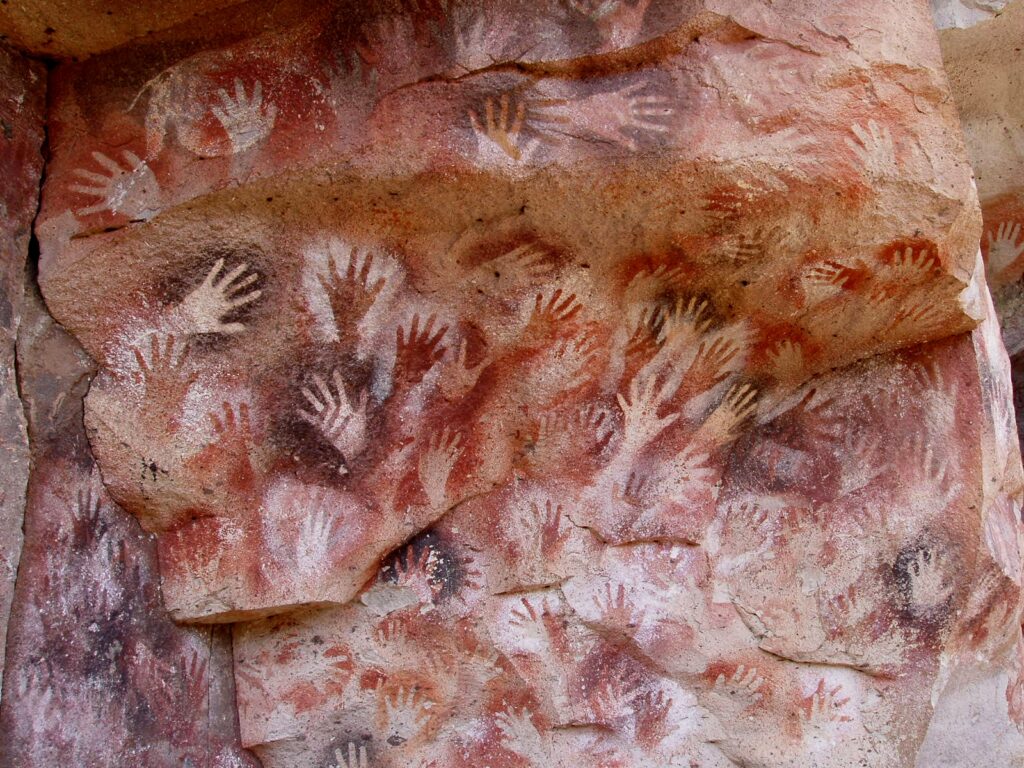
On the tropical island of Muna, off southeastern Sulawesi in Indonesia, a cave known as Liang Metanduno holds layers of artwork spanning thousands of years. Birds, boats, mounted warriors and human figures decorate its walls in red and brown pigment. In 2015, Indonesian archaeologist Adhi Agus Oktaviana began searching the cave for something older, beyond the more recent paintings that locals have long admired.
Near the ceiling, close to a faded drawing of a chicken, he found two hand stencils. One of them looked unusual. Its fingers appeared narrowed, with one tapering into a claw-like point. Using advanced dating techniques, Oktaviana and colleagues determined that this stencil is at least 67,800 years old, making it the oldest known rock art attributed to modern humans.
The discovery, published in Nature in January 2026, predates similar hand stencils found in Spain that were previously considered among the oldest. It also places modern humans in the Indonesian archipelago far earlier than once assumed, adding a new chapter to the story of early migration and symbolic expression.
Dating the Oldest Known Hand Stencil
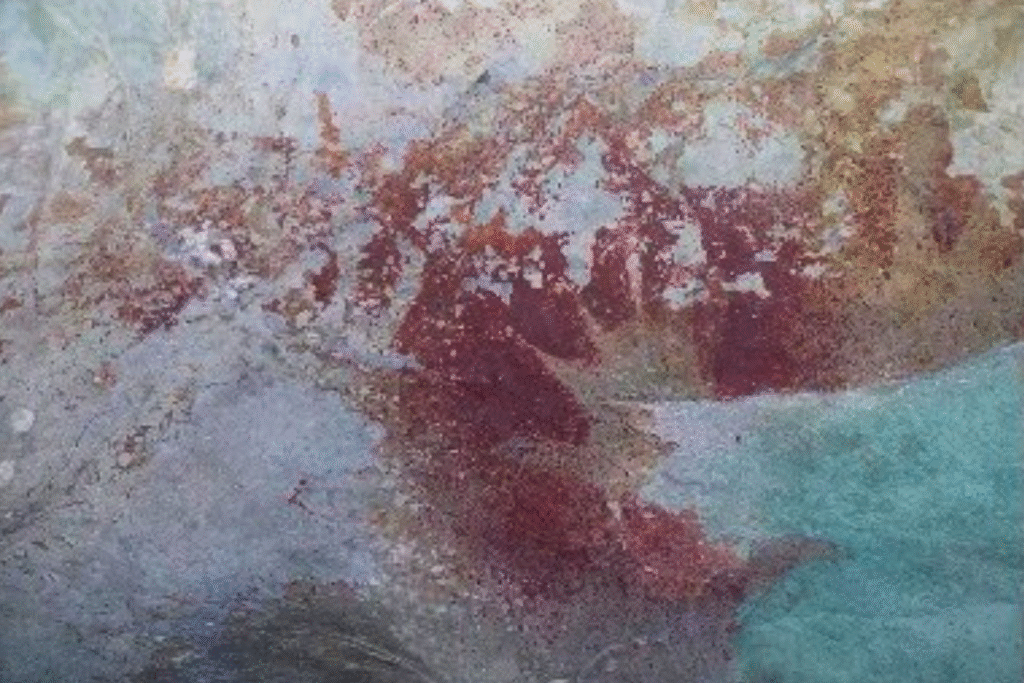
To determine the stencil’s age, the research team used a technique called laser-ablation uranium-series dating. Developed in part by Maxime Aubert, an archaeologist and geochemist at Griffith University in Australia, the method analyzes microscopic calcium carbonate deposits that formed over the pigment. Because the mineral layer developed after the paint was applied, it provides a minimum age for the artwork.
At Southern Cross University, researchers dated the claw-like stencil to between 75,400 and 67,800 years ago, settling on at least 67,800 years as a confirmed minimum age. A second nearby hand stencil in the same cave dates to around 60,900 years ago. The figures measure roughly 5.5 by 3.9 inches and are faint but still visible on the cave wall.
The team also examined other caves across Sulawesi and neighboring islands, finding additional hand stencils created between 44,500 and 20,400 years ago. The dates show that people returned to these sites for tens of thousands of years, using cave walls as canvases across vast stretches of the Late Pleistocene
What the Art Reveals About Early Human Cognition
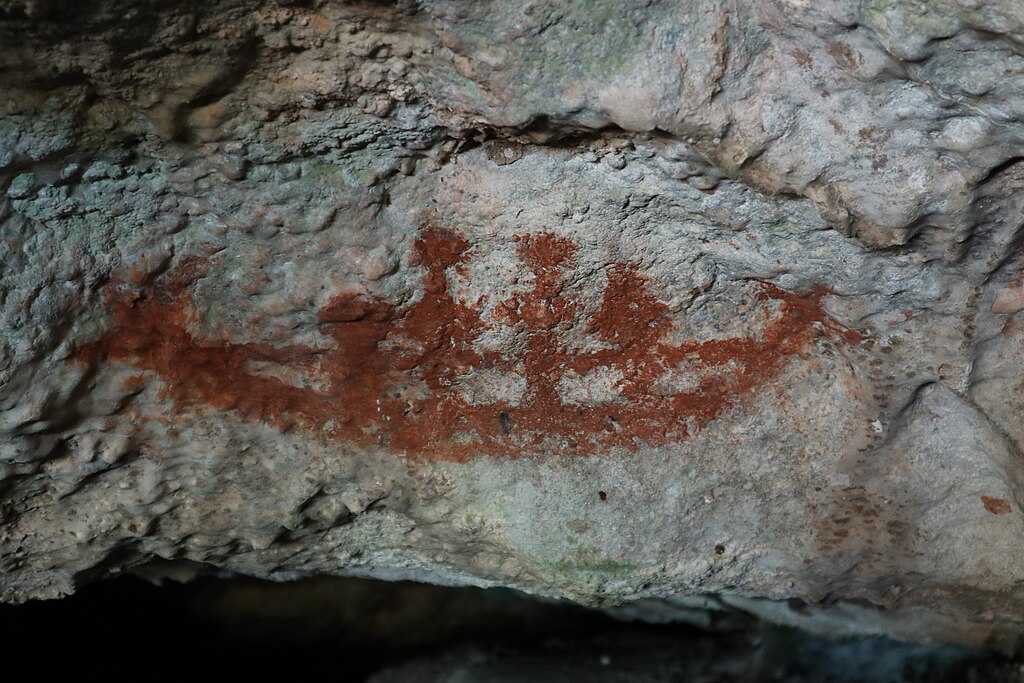
For Oktaviana, the age of the Muna stencil carries cognitive significance. “The age of the hand stencil in Muna shows that early modern humans who inhabited Nusantara during the Late Pleistocene epoch already had sophisticated cognition,” he said, referring to the Indonesian archipelago. The deliberate narrowing of the fingers, a style found only in Sulawesi, suggests intentional modification rather than a simple handprint.
Aubert said the altered finger indicates complex symbolic thinking. The artist may have retouched the finger with pigment or positioned their hand to create the claw-like effect. “They are drawing something that doesn’t really exist,” he said, describing the image as evidence of imaginative transformation rather than straightforward representation.
Not all scholars interpret the stencils the same way. R. Cecep Eka Permana, an ethnoarchaeologist at the University of Indonesia who was not involved in the study, suggested that hand stencils in Sulawesi might relate to rituals intended to ward off misfortune. Helen Farr, a maritime archaeologist at the University of Southampton, called the find “a small window to a wide range of activities that’s often missing” from archaeology at this depth of time.
Clues to Ancient Migration Routes

The discovery also feeds into a long-standing debate about how modern humans reached Australia. Research suggests that some groups left Africa between 60,000 and 90,000 years ago, moving through South Asia before arriving in Sundaland, a landmass that once connected parts of present-day Indonesia. From there, they would have had to cross open water to reach Sahul, the ancient continent that included Australia and Papua.
Sulawesi lies within Wallacea, a region of islands that were never fully connected by land bridges. That geography means early humans needed some form of seafaring ability to travel onward. The presence of 67,800-year-old art supports the idea that modern humans were established in this region before or during the migration to Australia.
Chris Clarkson, a professor of archaeology at Griffith University who was not involved in the study, said the location of the art is striking. “What amazes me most is that these artworks sit directly on a migration route into Australia,” he said. The finding supports a northern route through Sulawesi, Maluku and Papua, though Oktaviana has also suggested a possible southern island-hopping path that remains to be explored.