


For most of history, the Garden of Eden was treated as a story, not a place. That assumption is being revisited. Decades-old satellite imagery has resurfaced, reigniting interest in a geographical case that researchers first began building in the 1980s and 1990s. Archaeologists and biblical scholars are once again mapping ancient riverbeds and highland terrain against the details written in Genesis, and the question of whether Eden had a real location is back on the table.
Genesis Names the Rivers, and Two of Them Still Exist
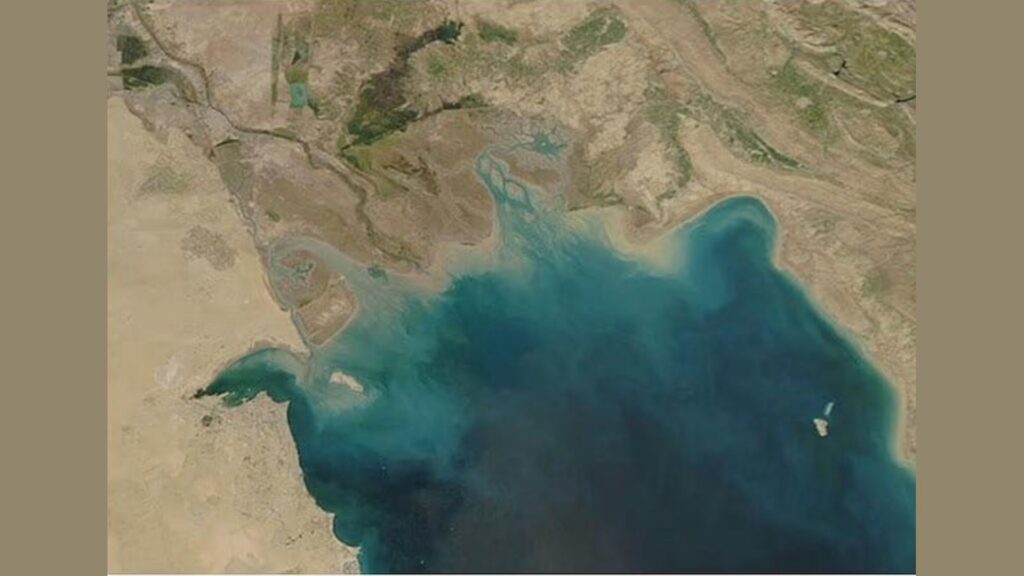
The Book of Genesis doesn’t just describe Eden in poetic terms. It names rivers. Four of them branch out from a single source: the Tigris, Euphrates, Pishon, and Gihon. The first two are easy to place on any modern map, running through Turkey, Syria, and Iraq before emptying into the Persian Gulf. The Pishon and Gihon are a different story. No rivers by those names appear anywhere on a modern map, which is where the real investigation begins.
A Fossilized Riverbed in Saudi Arabia May Be the Long-Lost Pishon

The imagery at the center of the renewed debate traces back to work done by Boston University geologist Farouk El-Baz in the early 1990s. While analyzing radar scans from NASA’s Space Shuttle Endeavour, something caught his attention: a massive channel, now completely dry, running from the highlands near Medina northeast toward Kuwait and the Persian Gulf. That channel, Wadi al-Batin, was once up to three miles wide, and El-Baz’s data showed it dried out between 3500 and 2000 BC, placing it in the right era to match the biblical Pishon.
The Biblical Description of the Pishon Mentions Gold, and That Detail Holds Up

Genesis describes the Pishon flowing through the land of Havilah, a region the text identifies with gold. Wadi al-Batin runs through the western Arabian Peninsula, an area Nat Geo notes was known for precious metals in antiquity. Archaeologist James Sauer, in an article for Biblical Archaeology, identified Wadi al-Batin as the closest geographical match to the biblical Pishon, though he stopped short of calling it definitive proof of Eden’s location.
Iran’s Karun River Has Its Own Case for Being the Gihon
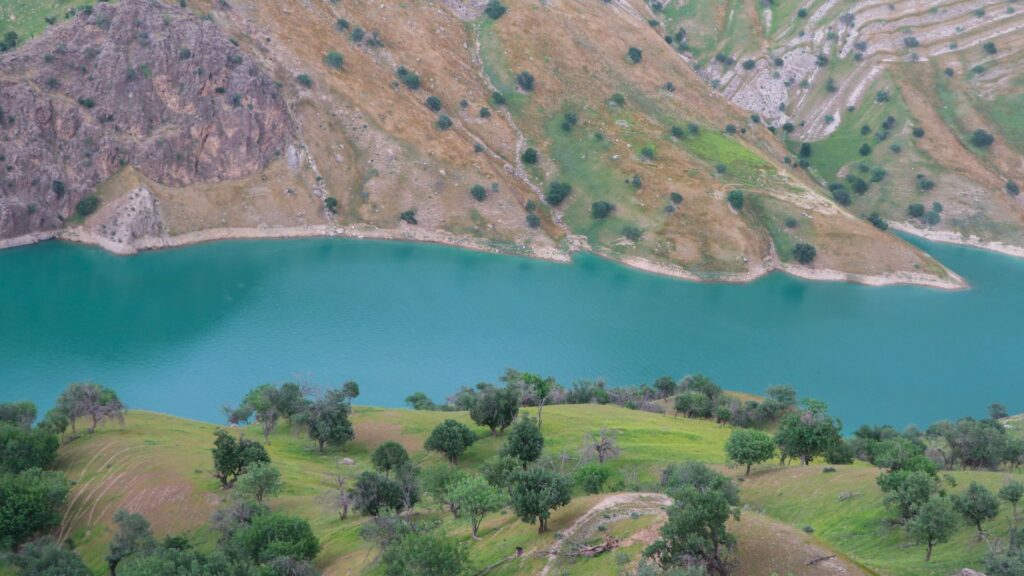
Archaeologist Juris Zarins pointed to Iran’s Karun River as the likely Gihon. The connection has a linguistic basis: Genesis uses the Hebrew word “sabab” to describe the Gihon’s movement, meaning to wind or circle, and the Karun twists through the Zagros Mountains in exactly that way. The river also ran through territory linked by some scholars to the biblical land of Cush, though as Yale’s Joel Baden has noted, “Cush” appears in the Bible referring to two distinct regions: one in Mesopotamia, and one in Africa around Nubia.
All Four Rivers Would Have Converged at the Persian Gulf
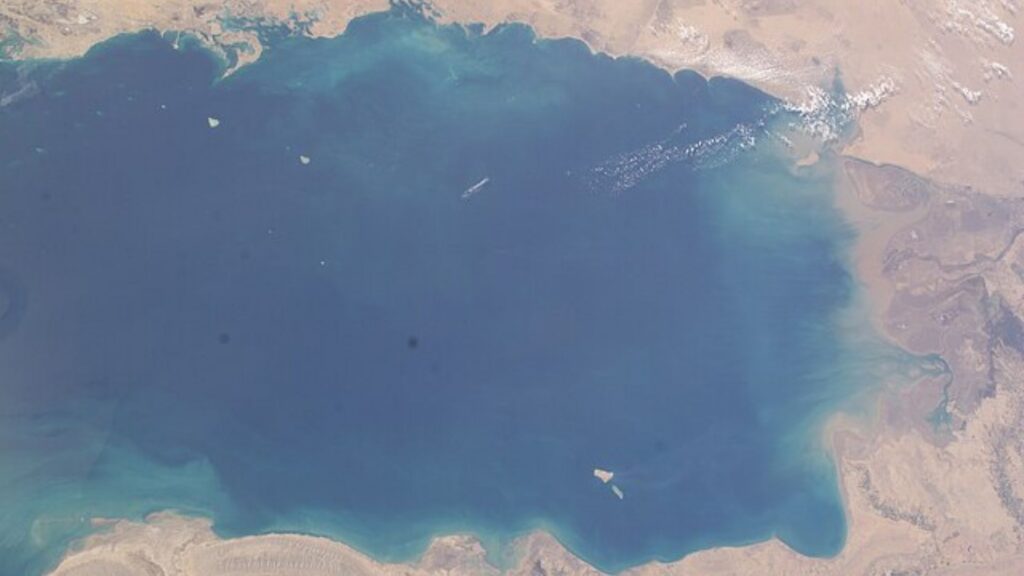
If Wadi al-Batin and the Karun are the Pishon and Gihon, all four rivers in Genesis once emptied into the same place: the northern Persian Gulf, near what is now southern Iraq and Kuwait. Zarins analyzed NASA satellite imagery showing ancient riverbeds near the Gulf that fit this pattern. According to Zarins, the Eden narrative may be rooted in real geography, a landscape reshaped by rising sea levels and climate shifts at the end of the last Ice Age. The theory, however, continues to draw a controversial reception among archaeologists and biblical scholars.
Arabia Was Once a Greener Place, and the Data Bears That Out
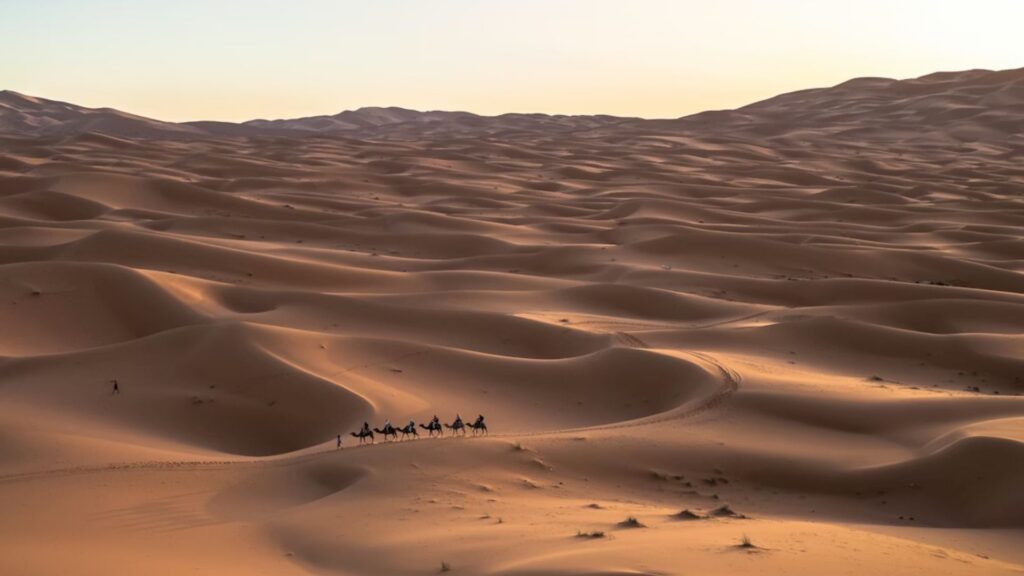
The Arabian Peninsula is a vast desert today, but it wasn’t always. Environmental data shows that the region experienced significantly wetter periods during the Holocene. This epoch followed the last Ice Age, when rivers like Wadi al-Batin were active waterways cutting through a much greener landscape. El-Baz has said this kind of imagery pulls back the curtain on landscapes that disappeared millennia ago, ones that perhaps even inspired the biblical narratives written about them.
A Competing Theory Places Eden in the Ethiopian Highlands
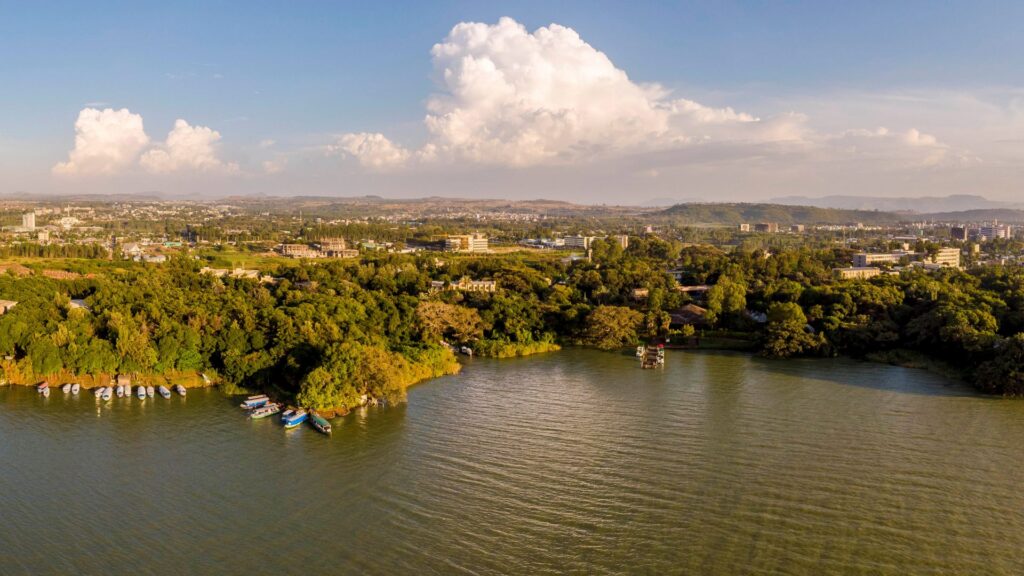
Not everyone is looking at the Persian Gulf. In a 2025 study, Texas-based chemical engineer Mahmood Jawaid argued that Eden was in Bahir Dar, a fertile area in northwestern Ethiopia near Lake Tana, where the Blue Nile begins. The region sits around 6,000 feet above sea level, has dense vegetation, and the waterways flowing from Lake Tana split into multiple channels that Jawaid maps against the four rivers described in Genesis. The study draws on both the Bible and the Quran, though it has not been peer-reviewed.
Many Scholars Argue Eden Was Never Meant to Be Found on a Map
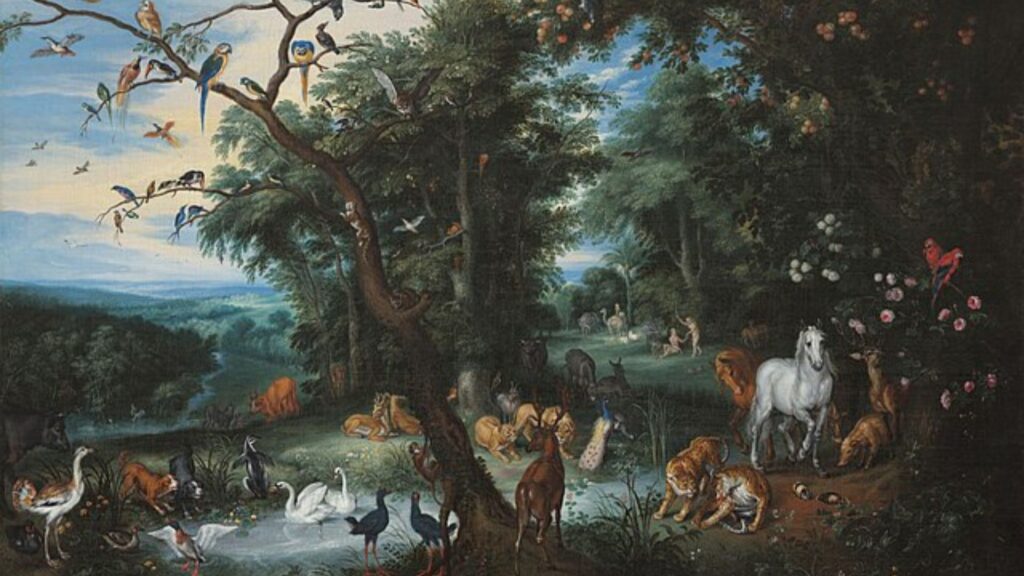
Some scholars think the search for a physical location misses the point entirely. University of Exeter professor Francesca Stavrakopoulou sees Eden as a symbolic space, one she places conceptually in Jerusalem rather than in any riverbed or highland. Mark Leutcher of Temple University says the garden stood in for the broader ancient West Asian world, stretching from the Mediterranean to the Assyrian and Babylonian frontiers. Yale’s Joel Baden says scholars have long debated whether Genesis had any real location in mind at all, or whether the geography was always part of the storytelling.
The Search for Eden Isn’t Over Yet
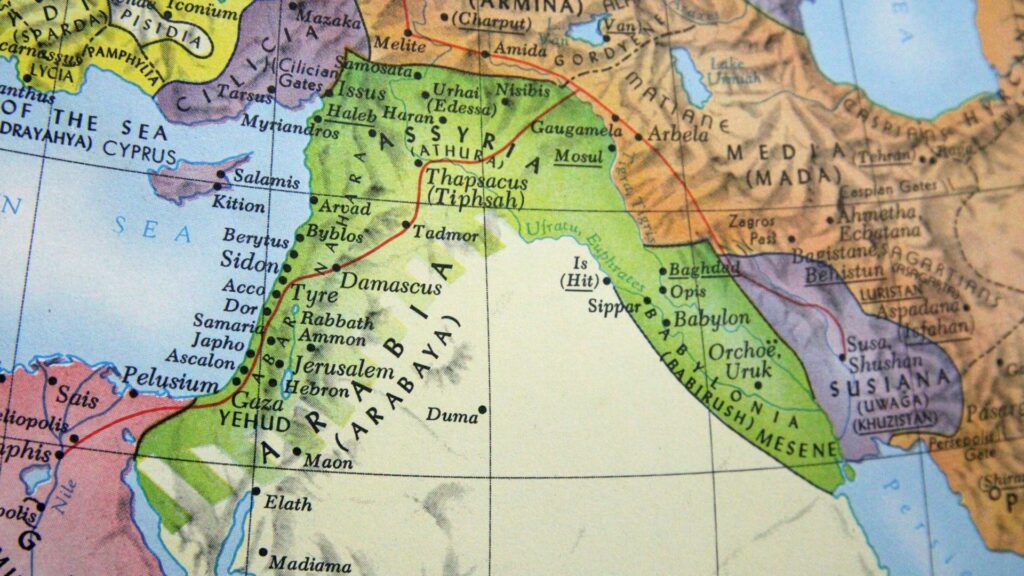
No theory has landed a consensus, and that may never change. But the research has done something useful regardless: it’s forced a closer look at the ancient world in which Genesis was written in and about. The fossilized rivers of Arabia, the archaeology of the Fertile Crescent, and the highlands of East Africa all point to a region of early human activity that real geography can speak to, even where scripture cannot be mapped precisely. What Genesis intended, and whether it ever pointed to a real place, remains the question scholars keep coming back to.